Storefront and display windows
The prime smash-and-grab target. Film, with an anchored edge, turns a quick hit into a long and noisy job.
Security window film · Toronto & the GTA
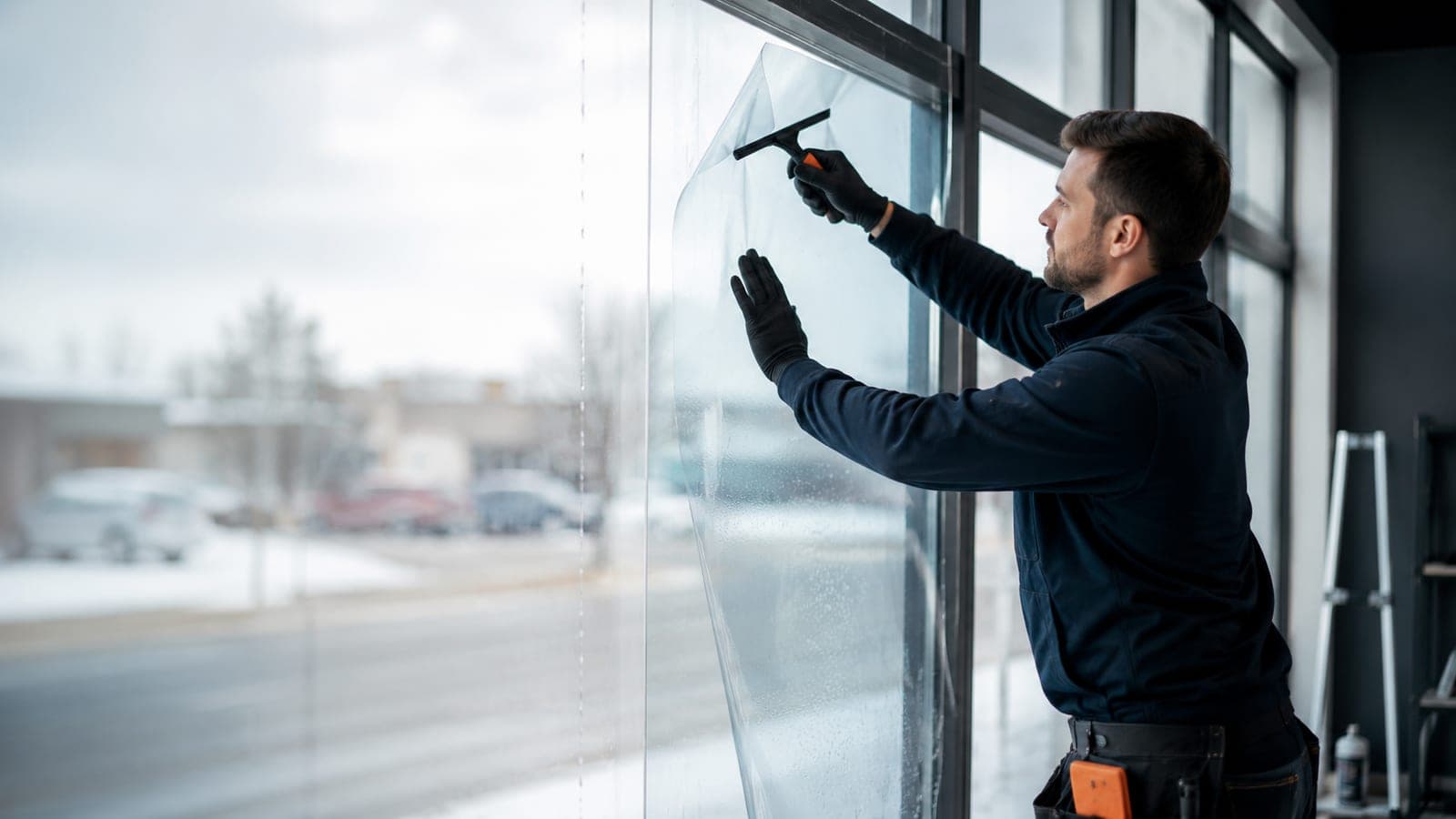
Clear film that bonds to your existing glass and holds it together when someone tries to smash through. A brick or a bar gets minutes of loud, visible effort instead of one quiet hit.
Security window film is a thick, optically clear polyester layer bonded to the inside face of your glass. The glass still breaks when it is hit, but the film holds the broken pane together in the frame, so there is no instant hole to reach through or climb through.
After years of smash-and-grab break-ins across the GTA, it has become the standard upgrade for storefronts and ground-floor glass. It is planned work, booked in daylight, and it pairs naturally with a glass replacement after a break-in.
The prime smash-and-grab target. Film, with an anchored edge, turns a quick hit into a long and noisy job.
Door glass and the narrow panes beside the lock, the spots an intruder reaches through to open the door.
Street-facing and backyard panes, the usual entry points on a house.
Large tempered panes that otherwise collapse into granules on the first solid hit.
Common-area glazing, lobby fronts and partitions, filmed with building management.
Attachment systems that tie the filmed pane into its frame, so the whole sheet cannot simply be pushed in.
It does not make glass unbreakable, and nobody honest will tell you it does. What it does is hold the shattered pane together in the frame, so there is no opening to climb through and every extra hit is loud, slow and visible from the street.
A smash-and-grab works because it takes seconds: break the pane, reach in, leave. Filmed glass takes those seconds away.
The pane cracks but stays in one sheet, and the attacker is left beating on a window that will not open up, in full view, with the noise carrying. Most give up and move on.
With an anchored edge system the film is mechanically tied to the frame as well, which holds up longer against a determined bar attack.
Film is the upgrade you can put on the glass you already have. Laminated glass is the equivalent built into a new pane.
Bars and shutters protect more but change how the property looks.
| Option | How it protects | Look | Best for |
|---|---|---|---|
| Security film | Holds the broken pane in one sheet; anchored edges tie it into the frame | Invisible on clear glass | Upgrading existing windows and storefronts without replacing them |
| Laminated security glass | A plastic interlayer built into the pane itself | Looks like ordinary glass | New glazing, or the replacement pane after a break-in |
| Bars and grilles | A physical barrier behind the glass | Visible, changes the frontage | High-risk rear and alley openings where looks matter less |
| Roll shutters | A solid cover when closed | Industrial, hides the display | After-hours cover where the window display does not need to be seen |
Yes, that is the point of it. Security film retrofits onto your existing glass, single pane, sealed unit or tempered, without replacing anything.
Film is priced by the glass area and the film grade, plus edge anchoring where it is fitted. We measure first, so the quote is firm before any film is ordered or cut.
What drives the price:
Tell us roughly how many panes and their sizes and you will have a working range on the phone. A few ground-floor home windows sit at the low end, a filmed and anchored storefront sits higher, and either is well below the cost of replacing the same glazing with laminated glass.
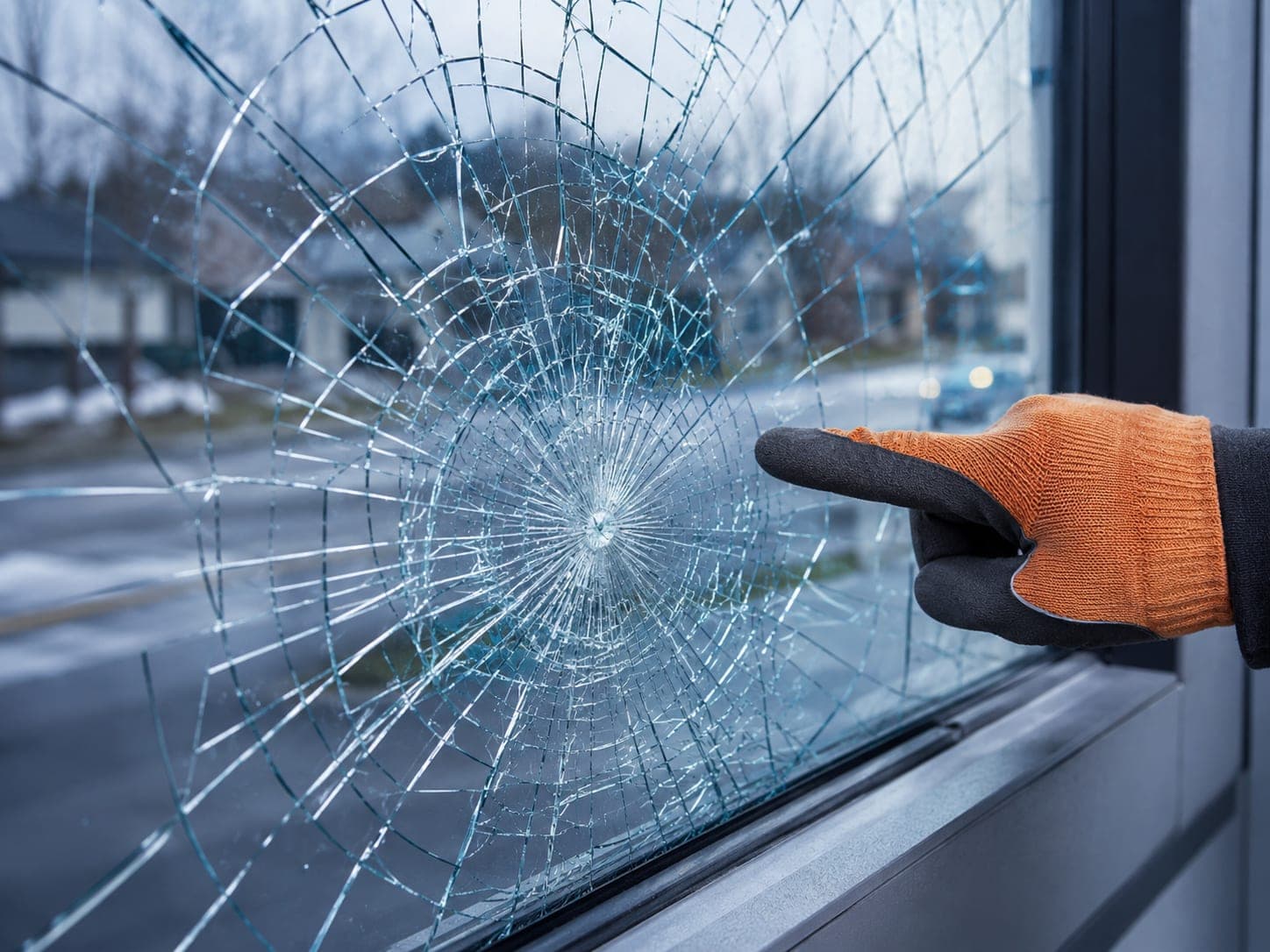
Most people ask about film in the week after a break-in, while the plywood is still up. That is the cheapest moment to do it.
We fit the replacement pane and apply the film to the new glass in the same booking, one visit instead of two. If you run a storefront, we can film the rest of the frontage at the same time, so the next attempt meets the same resistance everywhere.
No. Break-in security film is optically clear, and on clean glass it is effectively invisible from the street.
If you also want heat and glare control, the same films come in tinted and solar versions, so both jobs can be done in one layer.
Yes, and tempered panes are where it earns its keep. Tempered glass crumbles into small granules on a hard hit, which normally means the whole opening is instantly clear.
Film holds that crumbled sheet together in the frame, so a patio door or storefront pane stays a barrier instead of a doorway.
Most homes and single storefronts are done in one visit. The glass is cleaned, the film is cut to each pane and applied to the inside face, and the window is usable the same day.
The adhesive then cures to full strength over the following weeks.
Security film is a long-term fixture, not a consumable. Quality films are rated for many years of service on vertical interior glass and carry a manufacturer warranty, which we confirm for the exact film in your quote.
The logic is the same for a house: break-ins go through ground-floor windows, patio doors and the glass beside the front door. Filming those panes means a smashed window stays sealed and noisy instead of open, and unlike bars it does not change how your home looks.
The glass breaks but stays in one sheet in the frame, so the property usually stays sealed until we get there. The pane is then replaced like any broken window, filmed again, and you are back to full protection.
The film protects the opening; it is not reused once the glass under it has shattered.
Tell us which windows or storefront you want protected. We measure, quote firm and film it, homes and businesses across Toronto and the GTA.